By clicking “Accept,” you agree to the use of cookies and similar technologies on your device as set forth in our Cookie Policy and our Privacy Policy. Please note that certain cookies are essential for this website to function properly and do not require user consent to be deployed.
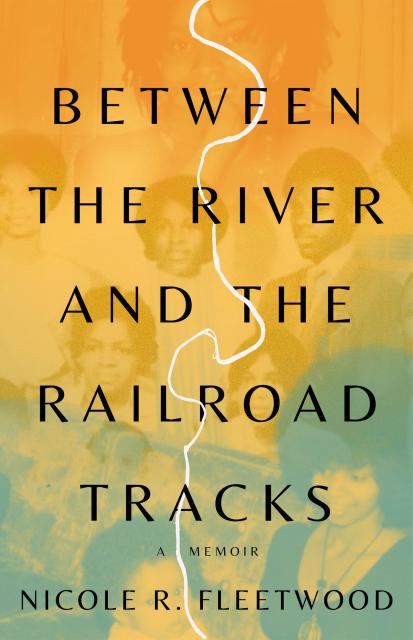
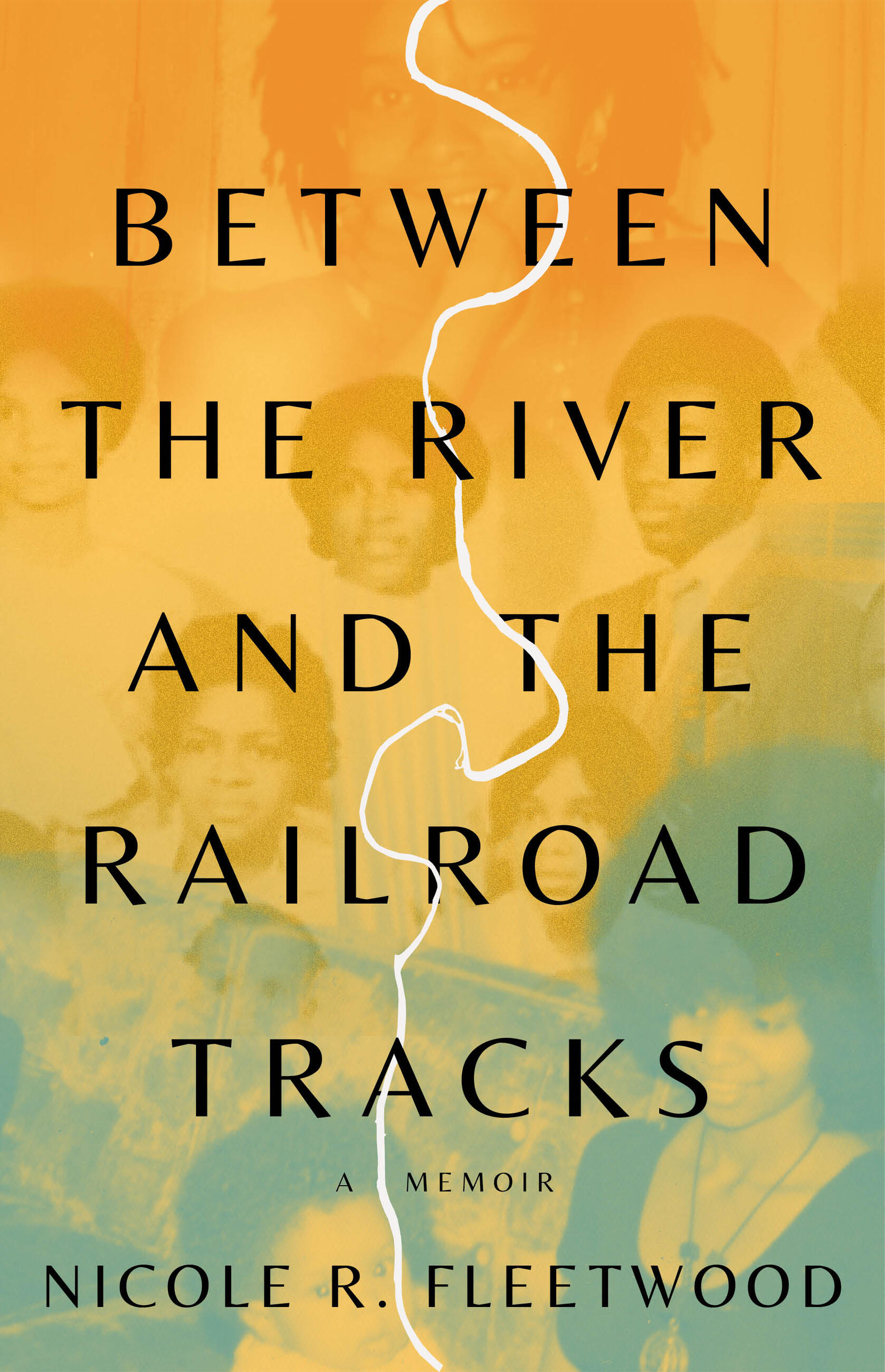
Between the River and the Railroad Tracks
A Memoir
Contributors
Formats and Prices
- On Sale
- Nov 17, 2026
- Page Count
- 320 pages
- Publisher
- Little, Brown and Company
- ISBN-13
- 9780316564335
Price
$14.99Price
$19.99 CADFormat
Format:
- ebook $14.99 $19.99 CAD
- Hardcover $30.00 $40.00 CAD
- Audiobook Download (Unabridged) $31.99
Preorder from Retailers:
Meticulously crafted and unflinchingly vulnerable, Nicole R. Fleetwood’s multigenerational family portrait braids the intimate life of a neighborhood with the historic arc that shaped it to offer an untold story of the black Midwest.
In 1973, Hamilton, Ohio, was a mill town so typical it prided itself on being quintessentially American. In harder times, it proved to be a bellwether. Here, young Nicole is born into a fourth-generation household in the Second Ward, a segregated neighborhood between the river and the railroad tracks.
In this tight-knit community, most of Nicole’s neighbors are like her relatives: large, intergenerational families a few decades up from the South. They build their own institutions, create music with global influence, and uphold a code of conduct centered around safety and belonging.
But the legacy of slavery and the entrenched racism of the Midwest cast a shadow over the Second Ward. The Fleetwoods bear their struggles as an ancestral curse, one that dooms their menfolk and burdens their women. The family lore echoes in Nicole’s earliest memories.
As Nicole grows up, the curse spreads through her community. She witnesses the Second Ward undergo devastating changes that impact her family and neighbors. The loss of factory jobs, growing political divides, and the crack epidemic wreak havoc, seeping through the walls of her family home and replacing the sense of community and familiarity with destitution and violence.
Nicole nurtures her intellectual curiosity and independence, dreaming of college and the world beyond. But she fears that leaving the Second Ward means abandoning everything she’s known—the neighborhood map that kept her safe, the community that raised her, and the family that loves her. In a powerful testament to black love and inheritance, Between the River and the Railroad Tracks asks whether we can ever leave home.
Oprah Daily’s “Best Books of Fall 2026”
Genre:
-
“There is an art to taking home with us, and Nicole R. Fleetwood has made a wholly breathtaking book about the rigorous art of what it means to bring home into places it's never been painted before. Foundational and intergalactic in its artistry, this is what memoir in the hands of prodigious talent can do.”Kiese Laymon, author of Heavy
-
“This memoir is not an exemplary tale of the working class in the Rust Belt or a family saga of the Great Migration; it is a singular story of a particular family burdened by ‘the curse of the men’—cruelty and mental illness and tragic ends—and the women who love and endure them. In this haunting account of the intimate and psychic imprint of ‘slavery paid forward,’ Fleetwood reminds us that beauty exists even in the worst circumstances. This is a tender and harrowing narrative written at the edge of violence and care.”Saidiya Hartman, author of Wayward Lives, Beautiful Experiments
-
“As a historian I am humbled, as an Ohioan I am delighted, and as an American I am privileged to have this book. It takes courage and generosity to truthfully chronicle a childhood, and brilliance and insight to connect it to the larger histories we might not otherwise see. Nicole R. Fleetwood teaches me about some places I thought I knew, leaving me grateful for this American story.”Timothy Snyder, author of On Freedom
-
“A clear-eyed and beautiful narrative asking the bigger questions about family, home, legacy and love.”Jacqueline Woodson, author of Brown Girl Dreaming
-
“When Nicole R. Fleetwood took up swimming as a child, she went without goggles and ‘saw it all.’ The same can be said of how she navigates the streets of the Second Ward, and how she crafts every sentence of this breathtaking book. Fleetwood maps the world around her and the contours of her own growing mind. She notices boundaries, takes care, feels love, hears music. And she is always — always — asking questions. Is he laughing or crying? What is she thinking? Who did this? Out of her study of detail, Fleetwood cultivates a remarkable vision that guides her, and her readers, through shattering events in her family, her community, and her country. She establishes that the people of Hamilton, Ohio are known for making stuff: paper, appliances, locks. What Fleetwood has made here is a new literary classic. It will change you. May it also change America.”Lissa Soep, author of Other People's Words
-
“Nicole R. Fleetwood’s brilliant memoir Between the River and the Railroad Tracks is at once a moving homage to the strength and saving grace of matriarchs, a poignant examination of the social ills blighting black communities, an indelible tribute to home, and the inspirational origin story of a woman who forged herself into an extraordinary cultural force. Fleetwood reaps from the microcosm of her beloved Ohio neighborhood a fascinating macrocosm of America.”Mitchell S. Jackson, author of Survival Math
-
“Between the River and the Railroad Tracks is vivid and wonderfully transportive, building a touchable world through language, illuminating the undertold story of a very specific corner of Ohio, and the people in it, and how that place and those people can cast a useful and vital lens onto the wider world.”Hanif Abdurraqib, author of There's Always This Year
-
"An intelligent, deeply felt memoir for readers of The Yellow House, Paper Girl, and Keeper of My Kin . . . [A] searching, honest, and engaging personal narrative. The book is buttressed by meticulous research into the history of the Second Ward of Hamilton, Ohio, a Black neighborhood created by redlining and exclusion . . . A brilliant counternarrative to the “Hillbilly Elegy” version of southwestern Ohio."Kirkus Reviews (starred)
-
"[A] brilliant account of growing up in a majority-Black Ohio neighborhood in the 1970s. With cinematic scope, Fleetwood chronicles her and her family’s attempts to 'be birthed anew, to have vision enough' to escape the burdens of slavery and segregation in Hamilton, Ohio’s Second Ward . . . [Fleetwood] trains her keen powers of observation on the ways her home has shaped her. [BETWEEN THE RIVER AND THE RAILROAD TRACKS is] a stirring self-portrait."Publishers Weekly (starred review)
-
Praise for Marking Time:
Winner of the National Book Critics Circle Award
A Smithsonian Book of the Year
A New York Review of Books “Best of 2020” Selection -
“Profoundly revisionist.”National Book Critics Circle
-
“[An] absorbing book…Fleetwood seeks to revise the mainstream media narrative.”New York Times Book Review
-
“Elucidating the cultural and aesthetic significance of visual art created by incarcerated people.”MacArthur Foundation
-
“[Fleetwood] brings together an impressive array of paintings, sculptures, murals, and photos that speak to the impact of incarceration on American life…In amplifying the stories of those marked by incarceration, she makes visible the individuals and families the carceral state has tried so hard to disappear and silence.”Los Angeles Review of Books
-
“[An] ambitious book…Fleetwood deftly weaves personal narrative together with nuanced readings of artworks created by incarcerated people…She models how creative expression can build the coalitions necessary for imagining and realizing a more just society.”Smithsonian
-
“An urgently political text…Fleetwood’s analysis follows a narrative arc that moves across artistic mediums and within the physical architecture of prison itself…Marking Time moves fluidly between this art historical survey and a sharp attention to the social apparatuses that have enabled the very foundation of the prison state.”The Nation
-
“Marking Time is a tremendous achievement… It is the kind of book that stays with you long after you finish, inspiring change in us all.”Elizabeth Hinton, author of America on Fire