By clicking “Accept,” you agree to the use of cookies and similar technologies on your device as set forth in our Cookie Policy and our Privacy Policy. Please note that certain cookies are essential for this website to function properly and do not require user consent to be deployed.
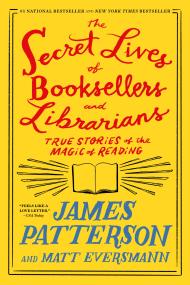
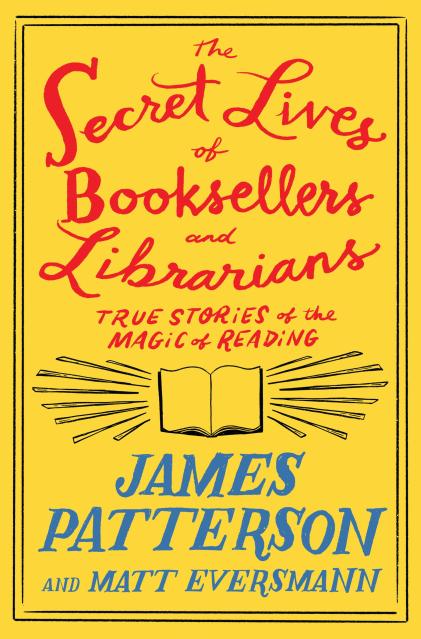
The Secret Lives of Booksellers and Librarians
True Stories of the Magic of Reading

Contributors
By Matt Eversmann
Formats and Prices
- On Sale
- Apr 8, 2024
- Page Count
- 400 pages
- Publisher
- Little, Brown and Company
- ISBN-13
- 9780316567541
Price
$14.99Price
$19.99 CADFormat
Buy from Other Retailers:
“A celebration of the world of books” —Kirkus
To be a bookseller or librarian … You have to play detective. Be a treasure hunter. A matchmaker. An advocate. A visionary. A person who creates “book joy” by pulling a book from a shelf, handing it to someone and saying, “You’ve got to read this. You’re going to love it.”
“When the pandemic started, Patterson launched a movement, #SaveIndieBookstores [and] pledged half a million dollars, and, with the support of the American Booksellers Association and the Book Industry Charitable Foundation, the campaign ended up raising $1,239,595 from more than eighteen hundred donors…Somehow, the bookstore outlived the pandemic. Why? The Secret Lives of Booksellers and Librarians, compiled by James Patterson and Matt Eversmann, suggests a few reasons.” —The New Yorker
Genre:
Series:
-
“The Secret Lives of Booksellers and Librarians is very touching and beautifully crafted. It is like having the James Patterson Storytelling Fairy Dust sprinkled down upon you and your life. No wait, it IS having the James Patterson Storytelling Fairy Dust sprinkled down upon you and your life!”Nina Barrett, Owner, Bookends & Beginnings
-
“I’m thrilled to be included in James Patterson’s The Secret Lives of Booksellers and Librarians. James Patterson was kind enough to come to one of the early Mystery Writers Conferences at the bookstore. I was so in awe of him that I could barely get the courage to speak. In this book, he makes me look smarter than I am. I love it!”Elaine Petrocelli, President and Co-owner, Book Passage
-
“A celebration of the world of books. ... and the deep satisfaction of creating a vibrant community for readers. A compendium of warm recollections."Kirkus
-
"A lighthearted compendium of first-person reflections from librarians and booksellers about their work and passion for literature... comfort food for bookworms."Publishers Weekly
You May Also Like



What's Inside
Author’s Note
You are holding a book in your hands right now. Or maybe listening to one. If you live in America, you’re among only one in five who can read a book and are actually in the habit of reading books. To my way ofthinking, that statistic is dystopian.
In America we urge everyone over the age of eighteen to vote, but only 15 percent of voters read books. Only 15 percent of us perform the life-affirming, sanity-bolstering, empathy-forming act of spending time inside somebody else’s brain.
Fortunately—in spite of cell phones, in spite of video games, in spite of online gambling and porn, in spite of the current storm of shortsighted politics—the habit of reading books is not yet on the brink of extinction.
Not yet.
This is in no small part due to an elite corps of frontline workers, people who are holding that line, and sometimes even turning the tide. I’m talking about the thousands of booksellers and librarians working long hours to keep reading alive and getting little recognition for all that they do.
Today’s booksellers and librarians are not the sitcom stereotypes who give judgy looks when someone brings the latest bestseller to the counter, or who will shush an overenthusiastic teen to churchy quiet from sixty yards away.
Today’s booksellers and librarians are extraordinarily good at understanding and motivating. Armed with empathy, wit, and professional training, they take the confused, the fearful, the frustrated, and help them become more keen-eyed, sharp-eared, and justice-attuned. What they do is crucial for this country, especially right now. They understand in their hearts and souls that in the beginning was the word.
Day after day after day, they find the right book for the right person, and in so doing, they help save people’s—and our collective—lives. And maybe our sanity.
To my mind, there are no professions more noble than bookseller and librarian.
Nor, as you will soon read, are there professionals who are more surprising and inspiring.
—James Patterson
•••
Alexis Sky
Alexis Sky lives outside Albany, New York, and has two bookselling homes: the Book House of Stuyvesant Plaza in Albany and Market Block Books in downtown Troy, New York.
“Ah, I just love that smell,” I hear a customer say to a friend as I’m doing some shelving at the back of the bookstore. “What smell?” his friend says.
“The smell of a bookstore,” the first customer replies. “It smells like books in here!”
I chuckle, but I know exactly what he means. Most chain stores either open into a mall, or they smell like coffee—or both. But walk into an independent bookshop, and there’s a particular intoxicating book scent.
It’s definitely not available online.
I head to the front to grab a box of books, and the customer spots me.
“Excuse me,” he says, holding up his phone. “I need this book.”
“What book are you talking about?”
“This one, from the interview this woman just posted.” He turns to his friend, saying, “I don’t know who does their social media, but it’s on point.”
I peer at the customer’s phone. “That’s just me!” We both laugh.
This is a small independent shop. We don’t have a store manager. I do returns. I do the buying. I do the receiving. I run the website. And I do all the social media, which I absolutely love, even if I’m not the typical demographic. I mean, my first Facebook account was in college, when it was still called The Facebook.
I find the book and hand it to him. “Here it is. It’s really good.”
“I know. I watched your video,” he says. “I had five of my friends follow you because I love your recommendations. You do a great eclectic mix.”
This is why I love my job. My heart’s plugged into this work.
A lot of customers tell me they feel the same way. Hey, who’s this Alexis person? I like all the books she’s recommended. What else is she suggesting?
📖
I love witnessing the excitement kids feel, walking out the door hugging their books. Or overhearing adults say, “It’s been so long since I picked up a book, but, man, I couldn’t put this one down. I read it until one in the morning.”
To me, books are the greatest kind of escapism. I may have a master’s degree, but one of my favorite books is Twilight. It’s just escapist fiction at its absolute best. To each their own, but my attitude is: Listen, I have a kid at home, I have a full-time job. I teach. I have a big life. But I don’t want to think about my big life for a little while. For two hours, I am not Alexis in Albany. I am in the world of Forks, or I am in Wonderland, or I am in Hogwarts.
One time a girl comes in, and I suggest a favorite book of mine. (The author claims my personal recommendations are the reason it’s still in print.) “It’s a beautiful book,” I tell the girl. “Please try it.”
A week later, she’s back in the store looking for me. It’s my day off, but she doesn’t want anyone else’s help. The next time I’m scheduled to work, she’s waiting at the door.
“Okay, it’s been two days. What else do you recommend? I need at least three books.”
Some customers I even buy for outright—I put books I know they’ll like on the hold shelf. I have one older woman customer who loves racy romance novels, and now for every holiday her husband comes in to buy her gift certificates and ask if I’ve set anything aside.
When I hand him a stack of books, he smiles and says, “This is why you shop independent.”
There is nothing better than that phrase. That’s all I need to hear.
I live in Watervliet, outside of Albany, New York, but I grew up west of here in a tiny little town with an amazing library and local independent bookstore, Mysteries on Main Street. I’ve been an indie girl since I was old enough to spend my weekly allowance on books—not that my allowance even covered what I bought, but the bookseller just could not say no to me. I swear my dad must’ve had to go down regularly to pay my tab. It’s not as if we had a huge disposable income. I was the oldestof five. My mom was a payroll accountant at a local mill, and my dad owns a stained-glass business.
But my parents are voracious readers too. My mom is the head coordinator of our local Jane Austen Society. So my parents always made sure I had a huge bookcase in my room, and they had an arrangement with our local librarians: I was allowed to borrow any book, as long as they were kept informed.
“Alexis is reading an adult book today. You might want to have a discussion.” That was the extent of it. No one forbade anything.
Often, those adult books went right over my head anyway. One of my dad’s favorite stories is how once, when I was eight years old, I looked up from my book and asked him, “Daddy, what’s ether?”
“I’m sorry, what?” he replied, a little confused. “What are you reading about? Animals or science or something?”
“Oh no, I read about it in this awesome book,” I told him.
“It’s about these two best friends who go to this mythical land called Las Vegas. They go to a casino, and to a circus that gives them money. And, Daddy, they ride these things called dune buggies. I don’t know what it is, but I want one.”
“Oh my God,” my dad said. “You’re reading Fear and Loathing in Las Vegas?”
“It’s like Alice in Wonderland for boys, right?”
My dad grasped the lifeline I threw and said, “Yes, Alexis. That’s exactly what Fear and Loathing in Las Vegas is about. It’s about two best friends who go to Wonderland. Yes. And when you turn eighteen, please reread the book and we’ll have a different conversation.”
📖
My first job after getting my master’s degree in art history and museum studies is at a museum, but they just don’t have the hours. So when I notice that Borders, the big book chain at the mall, is looking for workers, I go in to apply.
“We’re only hiring for cash register,” Gary, the assistant manager, tells me. “But if you prove yourself, I’ll put you on the red table.”
A lot of the kids who work at the store are just there to ring out a register. They don’t read. They’re not there for the books. They’re literally there because it’s a better job than working fast food, and I don’t blame them. It is a dang good job.
But the red table turns out to be where all the people like me go. We all have master’s degrees in subjects like philosophy or women’s studies, and we’re all working here because we love books. Borders is a big corporation, but Gary has an independent-bookstore mindset. “I want people who read. I want people who are interested. I want dynamic voices on the floor. I want diverse people on the floor.”
I’m there for about a year and a half when I’m asked if I want a management position. Then, the very next day, we find out that Borders has declared bankruptcy and all the stores will be closing.
“Well, we still want you to be a manager.”
Of what, a sinking ship?
📖
“You know furniture, you used to work in a museum. You can be in charge of selling all the furniture,” I’m told.
The furniture? I know mahogany. I know Stickley. “I’m not selling books anymore? I just sell furniture?”
Exactly.
Well, guess what? I do sell all the furniture. No other Borders store can say that. No other store has every piece of their furniture gone. I even get a bonus.
One of the people I sell to is Susan Novotny. Susan owns the Book House, a 6,000-square-foot independent bookstore in Stuyvesant Plaza, a huge open-air shopping center in Albany. She also owns the Little Book House, the children’s bookstore next to the Book House, and Market Block Books, a smaller, more elegant and curated bookshop, in nearby Troy.
“I love the Book House,” I tell Susan as I load her up with racks and book carts.
Later I find out that Susan went to Gary and asked, “If there was one person that you would suggest to the Book House for a full-time position, somebody who’s flexible, somebody who’s a hard worker, who would you pick?”
“Alexis, without a doubt,” he tells her. “If you can scoop that girl up, do it.”
When Susan comes back to me with a job offer, I accept immediately. “What day do you close?” she asks.
“Thursday,” I tell her.
“Can you start on Friday?” she asks.
That was eleven years ago. She scooped me right up and it’s just been incredible.
📖
We all really do feel like a family at the Book House and Market Block Books. My daughter, Molly, is called the Bookstore Baby, since she’s grown up in the stacks. There’s nothing the other staff and I wouldn’t do to help out Susan and the stores.
The way the public rallies when coronavirus hits really touches me. Susan is confident from the start. She pulls me aside early on and says, “I think they’re going to shut us down. But don’t worry. The business will survive this. Our community will ensure it. We will ensure it.”
And damn, did we. Susan fights for us to be allowed to fill orders and do deliveries. “We should be open. We are bookstores. We are pillars of the community.”
With the libraries closed, she works with a couple of programs to get books delivered to children. So while food is being delivered by the Boys and Girls Club, so are books. Nourishment for their brains.
One day during lockdown, a man comes up and starts banging on the bookshop door. “I’m so sorry, sir,” I tell him through the glass. “I can’t open the door for you.”
He slaps a piece of paper on the window. It’s a check for $400. “This is for kids. This is for their books. Please buy them books.”
I start crying. “Oh my God. You have no idea what this means. I’ve met some of the children who need these books. Thank you.”
“That was from my company.” Then he pulls out another $100 and says, “And this is personally from me. Tell Susan, goddamn, thank you, thank you.”
The generosity of the community blows me away, because everyone is struggling yet people keep coming by, asking, “How many books can I buy for these kids? What can we do?” After a while it changes to “How do we support you now? How do we make sure you stay open?”
Stay here. Shop with us. Stay local. Not just at our store but at all these other stores. We’re all trying to survive. We’re here as a part of your community because you’re our community.
•••
Lorrie Roussin
Lorrie Roussin is a librarian at Luna Middle School in San Antonio, Texas.
“What’s that you’re reading? Is it any good?”
I look up to see one of the other eighth graders standing at the bus stop. I’ve been totally absorbed in my book, The Voice of the Clown by Brenda Brown Canary, a pulp horror paperback novel with a lurid cover.
I’m a military brat, and my family has just come back to Texas after three years living in England. England is where I discovered my latest favorite authors, Agatha Christie and Sir Arthur Conan Doyle—I consumed those books like crazy, checking out six or seven at a time from the library. I lived and breathed them. I’d get in trouble for bringing books to the familydinner table. I wouldn’t even put them down to sleep. At midnight or two a.m., I’d still be telling my parents, “One more chapter.”
Even if, as a ten- or eleven-year-old, I might’ve missed the nuances, I still thought they were fascinating.
The Voice of the Clown isn’t on the same level, but I talk it up to a classmate, describing the plot about a little girl and her creepy clown doll, and I hint at some jaw-dropping scenes.
All the other kids at the bus stop are also hooked. They beg to borrow the book from me.
“Okay, but one at a time,” I tell them. I start a checkout list, just like in the library. The paperback book gets passed from kid to kid—it’s so popular, I eventually have to put Con-Tact paper on the cover to protect it.
I’m thrilled to share what I’m reading with other people. I’m a natural-born librarian.
📖
At first, though, I go into teaching. Given my love of literature, I figure that being an English teacher makes the most sense, but soon I realize that my real passion is being a school librarian. In Texas, school librarians need a master’s degree and two years of teaching experience—and I do enjoy teaching. But now I get to focus on books, and on teaching what I love.
I’ve been a school librarian for twenty-six years now, in elementary, middle, and high schools. Middle school is where I feel I really belong.
High school kids are so busy—with their AP classes, their part-time jobs, their sports schedules. But middle schoolers still havetime to talk to me about books. They’re curious. They have more time to read. And they still want to be read to out loud.
The whole genre of young adult didn’t really exist when I was their age. There were basically children’s books and adult books, and not much in between except maybe Beverly Cleary, Nancy Drew or the Hardy Boys, and Judy Blume. I read everything Judy Blume wrote—even Forever, though that one was in the adult section, so I had to get my parents’ permission.
Once I outgrew children’s books, though, I pretty much just transitioned right into books like Jaws, The Exorcist, The Amityville Horror. Or Jackie Collins novels. I remember being with my mother, in line at the grocery store, and picking up Jackie Collins’s latest romance, Hollywood Husbands, a lusty story of high-powered fame and fortune.
“Are you sure you want that?” my mother asked, skeptical. “Oh, Mom, I already read the first one, Hollywood Wives,” I scoffed.
Now it’s a whole different world. There’s an entire young adult arm of the American Library Association (YALSA, the Young Adult Library Services Association), with their own reading lists and book awards. I’m on some of their reading committees, and we’re always on the lookout for books that are well written, that draw in reluctant readers, that have representation, that will appeal to a wide audience. I also help choose titles for the Texas Library Association’s Texas Maverick Graphic Novels Reading List (TMGNRL) for middle and high schoolers.
I never feel reading burnout because young adult has so many different genres to choose from. And I’m a fan of audiobooks and ebooks too. I’m always reading two or three books, either on my phone or the iPad I carry in my bag. I listen to audiobooks while I’m taking a walk around the lake and playing Pokémon Go. Even if I’m in line for the roller coaster at Six Flags Fiesta Texas, I’m reading.
My students call me a walking book blog. All they have to do is come in and say, “Hey, I’m looking for this, this, and this,” andI’ll find them a dozen books to consider. I always give them freedom of choice. It’s okay not to want to read certain books, or not to like certain books.
Encouraging kids to read gives them tools to safely navigate the real world, and to protect themselves. Reading helps them think critically—and it gives them the opportunity to learn about themselves and others, to create empathy and compassion. Students need to be able to see themselves in books, but also to be exposed to and experience somebody else’s life through books. Books are supposed to trigger conversations. So when we get book challenges, people saying, “We don’t want our kids reading a certain type of book,” it makes things really hard.
No one needs to be attacked for differences of opinion.
But any discussions should be done in a respectful manner. I mean, that’s what books are supposed to do. We may not agree on certain things, but we can agree to disagree, and this is how we do it. And then you learn things, because there are nuances that you can pick apart and talk about.
I don’t know why some adults don’t think that kids are capable of understanding or making decisions for themselves. Trust me, these students will tell you what they like and what they want and what they need.
📖
“Ms. Roussin! Ms. Roussin, Ms. Roussin, come here!”
The student storms into the library, calling for me at the top of her lungs. “Ms. Roussin, you’ve got to come here!”
What did I do? This is the same girl who came to me a few days ago, reluctantly looking for a book to read for class. I’d handed her All American Boys by Jason Reynolds and Brendan Kiely.
She stands in front of me, still worked up. “Ms. Roussin, this is the first book I’ve read that had me in it.” It just blew her away.
The same thing happens with another student. Over the Thanksgiving break, he takes home a stack of books, including All American Boys.
“Ms. Roussin,” he declares when he returns, “I read this book. Then my brother read this book. And then my mother read this book. And then my grandmother read this book. And now she says she’s going to buy me all of this author’s books.”
There’s no better feeling than knowing I helped make this connection, not only for my student, but for his entire family.
•••
Jessica Claudio
Jessica Claudio is the head store manager at the Barnes & Noble in Staten Island, New York.
I don’t judge anyone’s taste in books. I just love book pas- sion. It doesn’t matter what you like to read, as long as you love to read.
In Staten Island, we are part of New York City, but we are literally an island unto ourselves. My Barnes & Noble is the only bookstore on the island. Anyone who wants a book these days on Staten Island has to come to my store.
I got into the book business when I was sixteen. My sister was the café lead at our local Barnes & Noble, which had opened two years prior. And I applied for and got hired into a seasonal position, which has now lasted a little over eighteen years, with over ten years as a manager.
Each individual Barnes & Noble store manager is also a business owner. We get to make our stores fit where we live.
Like I say, we’re the only place around to buy books, so we’re big on a variety of subjects, from contemporary fiction and romance to history, from mystery and thriller to spirituality. Our loyal customer base represents all sorts of different minds coming together.
Being a big, commercial bookstore, we try to keep it as commercial as possible. Though when all the Barnes & Noble stores got new lines of leather-bound, collectible, giftable classics, it raised interesting questions.
What is considered a classic? What belongs in the classics section? A case could be made for putting most of the store in “Classics,” so where do we draw the line?
People look under classics when they’re purchasing sum- mer reading titles for their kids’ school assignments, which raises even more questions, like, “How could we leave out The Great Gatsby?” Since in our store, the classics section is adjacent to fiction, we keep it as fiction classics, but even then, “How modern do you go?” It’s an ongoing debate.
I love being on the selling floor talking about books with people, talking to my booksellers. Though when I come in for my shift, I go straight into the back room.
“What exciting books came in today?” I ask whoever’s working, because there are always exciting books coming in.
“Oh, yay,” I’ll say, if it’s a book that customers have been asking about, or a book that has been out of stock. Or maybe it’s a book that another Barnes & Noble posted on social media, a book that I ordered because I thought it looked cool.
I’ve never been a back-office manager. Whenever I have tasks that require me to be in the back office, I become the biggest procrastinator. Because I just love being on the selling floor, talking about books with my customers and my booksellers.
When hiring a bookseller, my first question is “Do you like to read?”
Then “What do you like to read?”
If I’m not familiar with their favorites, I might say, “I haven’t checked that one out yet. Why should I read it?” And we go from there.
I’m not sure how much of a connection can be forged between a grocery clerk loving the same oranges as a hungry shopper, or an apparel salesperson and a fashion-conscious customer both loving the newest pair of pants. But at the book- store, part of the job is talking about interests, in order to figure out what people are looking for. We want to help you find the book that will connect with you. Sometimes we’ve got to ask a lot of questions to get there.
📖
One of my customers comes in and asks me to look up a title. “Oh, we just got two copies of this book in the store,” I say.
“Let me see if I can find it.” And I do.
In passing, he mentions that his name is Michael DeConzo.
He is the author.
He is almost shy about it, but I get so excited. I am very passionate about helping out Staten Island authors, hosting book signings and things like that. Those are the people who support our store, and I want in turn to represent their books to the community.
“Oh, let’s get you to sign your book,” I say. “And we can take a picture and post it on our Instagram. And you can post it on yours and let your friends and family know that we carry your book here in Barnes & Noble.”
His friends and his family really show their support. They keep buying it off the shelf. So we are constantly ordering a few copies. He and his wife frequently have lunch in our café, where I stop in for my favorite latte. Whenever I see him and I know we have fresh, unsigned stock, I’ll say, “Hey, do you want to come sign some of these?”
One of our other customers, Mike, has a special routine. He always carefully puts away whatever books he’s been looking at.
“I can do that for you,” I tell him. “This is what I get paid to do.”
“Oh no,” he says. “I worked at a bookshop in college. I can do it. I can do it.”
One day, Mike rushes in, frantic, looking for a little plush toy he bought here at the store for his son. “Puppy Duppy” is missing, so I help him find a new Puppy Duppy to replace the one his son lost. And that son is now college age. Because I’ve known them for years and years and years, seeing Mike and his family at the store gets me feeling almost sentimental.
Another time, a teenage girl comes in visibly upset. “I need something good to read,” she says. “I need to get my mind off of things.”
“Maybe you can talk to me,” I say. “What’s going on?”
She starts to tell me about how her cat had a litter of kittens, and one of them didn’t make it. And she is just sobbing. We talk quietly for a little while and I recommend some books to clear her thoughts of losing that kitten.
I like to think she feels just a little better walking out that day.
People tell me all sorts of things because they’re so comfortable in the bookstore. A woman asks for books on pregnancy. She also shares a secret. Her daughter-in-law is pregnant, she says, but doesn’t want to tell anyone yet. But, she says, “I can tell you, because I don’t know you, that I’m going to be a grandma for the first time!” I squeal, and we are both just so excited.
Bookstores represent learning and ideas, curiosity. I get emotional thinking about my son potentially growing up in a place without a bookstore, without a place he’ll be able to browse for whatever he might be interested in or whatever finds him.
This store needs to stick around and do well. It’s important to me. It’s important to all of us.
•••
Diego Sandoval Hernandez
Diego Sandoval Hernandez is the supervising librarian for Jail and Prison Services at the Brooklyn Public Library in Brooklyn, New York.
Today marks my fifth year bringing library books to Rikers Island, one of the world’s largest—and most violent—jails.
Although Rikers can be a dangerous place, the individuals incarcerated there are normal people, just like you and me. They are fathers, brothers, sons, neighbors, and friends. They have regular interests, like soccer, music, history, and science. They have family and friends who love them, and who miss them while they’re in jail.
I’m the supervising librarian for Jail and Prison Services at the Brooklyn Public Library, and I lead an awesome team of correctional library workers. Rikers doesn’t have what we call a “standing library.” There’s no room full of neatly lined bookshelves for people to visit. Instead, we keep our books in cramped closets, sometimes even resorting to using empty jail cells as storage spaces.
Most of the incarcerated individuals at Rikers haven’t been convicted of a crime: four out of five people there are still waiting to go to trial. Some of the people there have been found guilty, but my coworkers and I believe that everyone deserves access to books and reference information, no matter what mistakes they’ve made. To us they are just library patrons.
Today, we’ll be providing book cart services, rolling carts full of books from one housing area to another.
The housing areas—living spaces shared by around forty people—are almost always loud, chaotic, and tense. People there are anxious about upcoming trials, about how their families are coping. They are bored and restless due to being confined for months—or years—with extremely limited access to meaningful activity. They face daily humiliations, like not having privacy when they use the toilet or being chained at the ankles when they walk through the hallways. All these stresses gnaw at their mental health.
People at Rikers tell me that one of the things they miss most, apart from their families, is having peaceful, quiet alone time. That’s part of why library services are so important to them: with the books they select from our cart, they can escape into their own worlds for a while.
The first patron I visit asks, “Do you have The Autobiography of Malcolm X?”
Like most of our patrons, this man is Black. People of color are a minority in America, but they make up the majority of the prison and jail population. Many of our patrons at Rikers have had brutally traumatic lives. They may have had parents affected by the crack epidemic, been sent to a juvenile prison when they were still in high school, or seen their friends killed by gang violence.
“I’ve read this one before,” I tell him as I hand him a copy of the book. “You’ll have to let me know what you think when I come back next week.” He grins, says thanks, and heads back to his cell to start reading.
The next patron I visit is Latino. Spanish is the second most-spoken language inside the jail, but I’m one of the only people in the correctional services library group who can speak Spanish fluently.
I explain our services in Spanish. The man relaxes, grateful to talk to someone who not only looks like him but can also speak his language. I know what a struggle that can be.
My dad was a Mexican diplomat, and I was eleven when we moved to the United States. I didn’t speak English well, but I learned the language by going to the library, taking out the Harry Potter books, and reading them while listening to the audiobooks. It’s alienating enough to live in a community where you don’t speak the language; I can’t imagine how much harder it must be when it includes people who dictate your life, like correctional officers and judges.
The patron doesn’t want a book. Instead, he has a research question. Since the incarcerated at Rikers don’t have access to the internet, we often do the research for them. Providing answers to research questions is another one of our core services. In library school, I learned how to sift through the web’s plethora of unreliable sources to find credible information.
“I’ll print out the information and mail it to you,” I tell him. I offer him one of our Spanish-language books. We don’t have a lot of money to buy books, so we have to rely on donations, and our Spanish-language selection is slim.
People think my job is just carting around books to incarcerated people, but it’s so much more than that.
Our TeleStory program connects family members with loved ones in custody at Rikers via teleconferencing equipment available at a limited number of New York Public Library locations. An incarcerated parent “televisiting” with their child can access library-provided toys, games, books, and arts and crafts. One of my favorite programs is Daddy & Me, a workshop that gives incarcerated fathers the skills to encourage early literacy in their children. My team helps incarcerated fathers pick out books that their children would like. The fathers then spend weeks practicing reading the books aloud before making a recording.They put a lot of love into it. The audio recording each father makes is transferred to a USB, which is given to the kids, along with the printed book, during the jail’s Family Day event. Getting all the way to Rikers can be tough for families, especially if one parent is left to provide economically for an entire family. If the family can’t make it, we mail the book and the recording to them. Like all library services, this program operates at no cost to families.
This is what I love about public libraries, why I’m drawn to this work. Whether you’re working in a branch or in jails, you can impact someone’s life, see people’s gratitude for the value you’re providing.
I went to undergrad and library school in Montreal, Canada. I’m attracted to public libraries because I don’t want to be limited to only working with university students. I really want to work with the general public. The New York Public Library comes to recruit at my library school, and talks about all the services they offer, such as the work they do with immigrants and incarcerated people.
They explain that there are three library systems in New York City: the New York Public Library system, which serves the Bronx, Staten Island, and Manhattan; Queens Public Library; and the Brooklyn Public Library. All three systems have outreach service departments and sub departments that work with jails and prisons.
📖
I go to work for the Brooklyn Public Library right out of school. At the time, the outreach jail team is working with librarian volunteers, so I first start going into Rikers as a volunteer. Then I’m hired into the full-time supervisor position.
Rikers Island is supposed to be a short-term holding space, but of course that’s not always the case. A lot of our patrons have been there for years and years.
When we aren’t able to do in-person services during the pandemic, we launch a mail-a-book program via tablets that are given to the people incarcerated at Rikers. It’s such a basic service, just providing books, but the importance and the value that it has inside of jails are tenfold.
There’s so much gratitude when the books start arriving. Message after message is sent to us saying, “We’ve been forgotten during this entire time and we’re just so grateful that you guys are out there offering all these types of stuff.”
When in-person services resume, on one of my first visits back, a very shy patron gets up the courage to ask me a question.
“Could you please bring me a Bible?”
“Of course,” I tell him. I don’t have one in my book cart, but I know I’ll have it at the library. “I’ll bring it to you next time,” I assure him.
The next time I’m there, he approaches again. “Do you have my Bible?”
“Yeah.” I hand him the book. “Here’s your Bible.” “Thank you so much.” He gets emotional.
I ask another incarcerated person, who’s around seventeen or eighteen years old, if he would like a book.
“I’m not a big reader,” he says. “What interests you?”
He shrugs.
I hand him a slim book on psychology that’s been popular at the jail recently. His brow furrows in concentration as he reads the text printed on the back cover.
“How do you pronounce this word?” he asks.
“Which one?”
He points. As he asks more questions, it becomes clear that he has a very low reading level.
There’s a lot of support available for people who want to get their GED, thanks to college volunteers. But those who don’t have a high enough literacy level to take GED classes tend to fall through the cracks.
Knowing this patron needs some easier reading, I grab a selection for him from the bottom shelf of the cart—Batman vs. Superman.
His face lights up. “Wow! I didn’t think you’d have comics.” “Of course!” I reply. “Reading should be fun. I’ll bring you some more when I come back next week.” “Thanks, man! You really made my day.”
Those are the moments that make it all worth it.
•••
Beth Jarrell
Beth Jarrell is reference librarian and digital archivist at Sanibel Public Library in Sanibel, Florida.
Libraries are about books, but not only about books.
People think of libraries as giant repositories for books and of librarians as people who sit around and read all day, two concepts that could not be further from the truth.
I grew up in Saskatchewan, Canada, where visits to our local public library were the highlight of my life. I always found something to read at the library. I was the kid hiding under the covers with the flashlight reading late into the night. “Just one more chapter, please, just one more chapter.”
📖
I get my undergrad degree in journalism from the University of Toronto, then land a job in a town called Swift Current, Saskatchewan, where, for six hours a day, I DJ at a classic-rock radio station and also do online news and multimedia storytelling. Journalism is really cool, but I decide I want to be under a different part of the information umbrella. I enroll in the library science master’s program at the University of Washington in Seattle. I quickly learn that the curriculum is geared to highly theoretical skill sets.
My first week, I’m freaking out. I don’t know if this is where I should be. I don’t know if this is going to be the right fit.
One of my professors says, “Most of you are here because you are the person that people turn to when they need to find something. Whether it’s your parents or a sibling or a friend or a coworker, you’re the person that people turn to and say, ‘Hey, can you find me information on whatever.’”
I calm down and realize, Oh yeah, that’s me, that’s absolutely me.
No matter where I end up after graduation, I’m confident that I’ll always be that person who can find the information.
I want to stay in the United States for as long as I can. I love this country. I’m very proud to live here. Fortunately, if you do your master’s degree in the United States, you can stay to work in your field.
I start looking for jobs, thinking, Hey, maybe I can land in Sanibel Island, Florida. I’m familiar with the place.
My grandfather often wintered in Sanibel. If you’re from our part of Canada, it’s basically a rule that you have to go to Florida for the winter at least once. I’ve been coming to Sani- bel every year since the mid-1990s. Despite being 3,000 miles apart, my grandfather and I bonded over classic Western novels like Larry McMurtry’s Lonesome Dove. I was a big horse girl, so I read Lonesome Dove in eighth grade. That book not only opened up a world of adult literature to me, it gave me and my grandfather something to talk about over the phone.
I walk into the library in Sanibel, Florida, with my résumé in hand and beg for an internship. What was supposed to be a six-month internship turns into a full-time job. Four years later, here I am.
From my first day on the job, what stands out to me is the librarians’ freedom to start new initiatives. Sanibel Public continues to be one of Library Journal’s America’s Star Libraries for public library service, meaning it’s always very highly rated, has great support from the community, and is really innovative in the ways it always pushes boundaries and always evolves in what it means to be a library.
Yes, Google’s great and ChatGPT is an interesting wave of the future, but neither has the human element of being able to sort and find. We offer bird-watching kits and we recently added a tool library so people can check out tools, hammers, screwdrivers, and we also have Tech IT Out, a rental service for laptops, GoPros, and Wi-Fi hot spots.
My favorite thing is helping people. Handing someone a book with the power to change their lives is magical because, oftentimes, it does.
So does restoring a lost part of their past, whether it’s finding an obituary of someone’s father they thought they’d never find again or having a woman come in and say, “Hey, I’ve heard my great-grandmother used to live on this island. I’ve never seen a picture of her. Do you know anything about her?”
I hand her a photo of her great-grandmother.
📖
Hurricane Ian strikes in the last week of September 2022. It’s an intense Category 4 storm. Sanibel Island is under mandatory evacuation. Two of our staff stay on to ride out the storm. I’m not that brave. I drive home to Canada for a month.
Libraries are information centers, but in the immediate aftermath of Ian, all we have are pictures that show the front doors blasted off the library and about three feet of water inside. Our front lobby is completely gutted. Our main entrance is gutted. Our secondary entrance is gutted.
We are thinking, Oh God, what are we going to walk into? As an archivist, I’m asking myself, How are these climate-controlled archival materials going to hold up?
There’s one bridge onto the island and one bridge off and that’s it. The causeway is washed away. Some people take boats over. There is no other way to reach the island until the Army Corps of Engineers comes in and makes emergency repairs.
Everyone is desperate for information, any piece of news we can get about our homes and the place we live.
I come back to the island in early November, along with a couple of coworkers. “We’re just going to do it,” we say. “We’re going to figure this out and serve people the best that we can.”
The library is right next door to city hall and the police station, so we’re on the newly restored main power grid. Day in, day out, we are on the ground, and we never stop our service. We get out on social media, promoting our ebooks and audiobooks, helping people find information, and even serving as a hurricane information center, sharing any details we have.
People come in our doors and start crying. “Thank God,” they say. “The library feels normal.”
A lot of our neighbors have lost everything they own. These are people who’ve worked hard their entire lives and saved up enough money to buy a house on Sanibel, live their dream. Now their condos or bungalows have ten feet of water inside and they’re camping in their front yards.
They’re already up to an eleven dealing with insurance people and plumbers and construction. They need access to printers and the internet, but they also need someone to talk to for a bit. While they print insurance documents and have our notary sign them, people tell us how they’ve lost their entire family histories, their father’s boyhood pictures and documents. As an archivist, I’m reminded of the days when town records were kept in churches. If a church burned down, there went the records.
Fortunately, our library building is two stories. Our first floor, with our meeting room and our lobby and our catalog- ing department, will need to be rebuilt. But the entire main collection, all the books, are up on the second floor. It looks unchanged upstairs. We have mold testing done, we have everything checked over, and our collection is perfectly safe.
We haven’t lost a single book.
•••
Susan Kehoe
Susan Kehoe owns Browseabout Books in Rehoboth Beach, Delaware.
It’s great that you love books and want to work at a bookstore,” I tell the potential employee sitting across from me.
“But do you also like to clean toilets?” It’s a valid question.
People always say they’d love to open a bookstore or work in one because they have this romantic notion of walking around all day with their nose in a book or sitting in a big, overstuffed chair drinking tea and talking about Dickens.
That’s not the reality. Part of the job is dealing with unexpected problems like clogged toilets and other little disasters that happen every day at the store—like sweeping sand.
A lot of sand.
Browseabout Books is located a block and a half from the ocean, in the middle of a mile-long boardwalk. In the summer months, we have a constant influx of sand. People coming up from the beach wearing bathing suits and bikinis are covered with it—and, when making purchases, they pull moist money from strange places.
Our 13,000-square-foot store attracts a mix of locals and tourists. In addition to books and menu items from a small café, we sell a little bit of everything—toys, games, even stationery. Working with an artist, we’ve created a line of jigsaw puzzles and other higher-end, gift-quality items that people want to take home with them. We’re big on changing up merchandise because we want everyone who comes into the store to have a unique experience.
But books are the heart of what we do, and books offer a way to escape reality and immerse the reader in another world. There are millions and millions of books out there, and people keep returning to the store because they trust our recommendations.
Especially those for kids. Everyone says kids don’t read anymore, which I don’t find to be true. We have so many enthusiastic kids leaving the store with stacks of books. They’re staring at computer screens all day long, so having a physical book in their hands, I think, allows them an escape.
I love it when a parent comes back and says, “My kid wasn’t a reader, but you guys suggested a book, and I gave it to him, and he hasn’t stopped reading. It’s like this whole new world has opened up for him.”
Knowing we can literally change someone’s life is pretty cool.
And it never gets old.
📖
Rehoboth is known as the nation’s summer capital because of its popularity with people from the DC area, which is roughly two hours away. After damages from Hurricane Sandy limited access to the beaches a little farther north in New Jersey, even more people discovered Rehoboth.
After college, I worked at a university bookstore, then became a commissioned sales rep for about forty publishers. Rehoboth was part of my sales territory. From the moment I met them, I had a great rapport with the original Browesabout owners, Steve and Barbara Crane, who opened the shop in 1975.
Over the years, Steve kept nudging, “My kids aren’t inter- ested in the business. Don’t you want to take over the store from us?”
I resisted for a while, but eventually I joined them at the store, taking on more and more responsibilities until I became manager. In November 2020, my husband and I officially pur- chased the store from Steve and Barbara.
Seems like a great idea to buy a bookstore during a pandemic, right?
Well, we did it.
It’s definitely a full-time job and then some. Thankfully, even though my husband tries to be involved as little as possible—he has his own career—I’m so grateful that he handles all the jobs that make me weep to think about, like scheduling floor cleaners and putting in new lighting. And he does them with a smile on his face because he knows it makes me happy.
The most gratifying thing is when people come into the store and just say, “We love Browseabout so much. It’s not only our favorite store in Rehoboth, it’s our favorite store anywhere.”
It really is great to be able to provide that for people.
Browseabout Books has seen generations of families. Kids who grew up in the store are always sending me applications for summer jobs. They could make more money waiting tables, but they want to work here because Browseabout has been a part of their lives. The resort areas are booming and there’s an influx of retirees buying new homes. Some of these folks, most of them former teachers, lawyers, and other professionals, also come to the store looking for part-time work.
We’re well known in beach-reading circles. Elin Hilder- brand, the bestselling author and “queen of beach reads,” is a store favorite. I felt like we made it when she gave us a little name-drop in her book Golden Girl—her main character, an author, mentions starting her book tour at Browseabout Books.
I’ve known Elin for so long that when she comes in for an event, there’s no awkwardness.
Which is nice. I’m terrible at small talk, so it’s no surprise that I don’t enjoy cocktail parties. But I’ve grown more comfortable in our bookstore environment, even when well-known TV personalities visit the store and do author events. And politicians. We’ve had book signings for both President Biden and the First Lady.
Luckily, the Bidens are very approachable. They engage and interact with people. Jill Biden often comes in here alone to pick out books. She’s hard to miss because of the cadre of Secret Service following her around.
Every time I see the First Lady, I think back to July 2018 and a book signing we had for Hoda Kotb, coanchor of NBC News’s Today show and author of the inspirational book I Really Needed This Today. Two hundred fifty people lined up to meet her. Even Jill and Joe Biden stood in line. They wanted to stop by to say hello and deliver a bouquet of fresh-cut hydrangeas from their garden.
Like I said, I’m not good at small talk, but anytime I see the Bidens, they make me feel comfortable. I’m not nervous about making conversation.
If I can talk to them, I’m always telling myself, I can talk to anyone.