By clicking “Accept,” you agree to the use of cookies and similar technologies on your device as set forth in our Cookie Policy and our Privacy Policy. Please note that certain cookies are essential for this website to function properly and do not require user consent to be deployed.
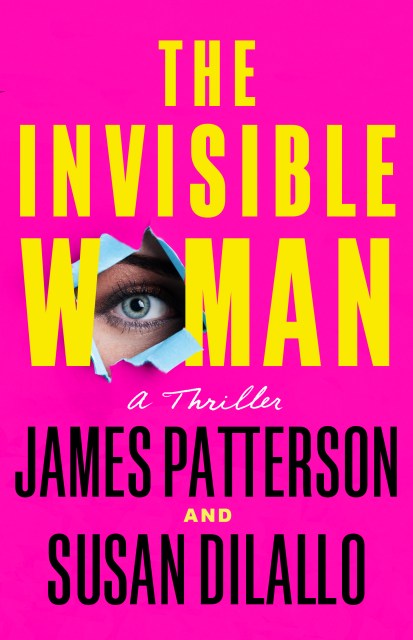
The Invisible Woman
A Thriller

Contributors
By Susan DiLallo
Formats and Prices
- On Sale
- Jan 5, 2026
- Page Count
- 352 pages
- Publisher
- Little, Brown and Company
- ISBN-13
- 9780316587075
Price
$30.00Price
$40.00 CADFormat
Format:
- Hardcover $30.00 $40.00 CAD
- ebook $14.99 $19.99 CAD
- Audiobook Download (Unabridged) $24.99
- Trade Paperback (Large Print) $32.00 $42.00 CAD
Buy from Other Retailers:
An undercover FBI agent investigates a family with suspected ties to organized crime—by posing as their live-in nanny in this thriller from the world’s #1 bestselling author, James Patterson.
No one sees her, but she sees everything. Elinor Gilbert was once a young woman with a thriving career at the FBI.
Now decades past solving crimes with the bureau, she is personally and professionally forgettable.
Which is exactly what her former FBI boss needs. He disguises Elinor as a middle-aged nanny, and casts her as an agent on the inside of his investigation into a New York art dealer suspected of ties to organized crime. But as Elinor pushes toward the truth, her superpower—anonymity—morphs into a fatal flaw.
The more the invisible woman integrates into her “host” family, the more dangerously memorable she becomes.
You May Also Like
What's Inside
•••
Chapter 1
MY NAME IS ELINOR GILBERT. And I am the Invisible Woman.
No, not the kind that can make a deck of cards look like it’s shuffling itself.
The other kind.
Two years at the same dry cleaner, and he still asks my name when I drop something off.
Five years at the same drugstore, and I doubt the pharmacist could pick me out of a lineup.
My kind of invisible isn’t fantasy or science fiction. It’s real. It happens slowly, over time. And you won’t even know it’s happening.
Then one day you’re in line at Whole Foods, feeling good about yourself and your healthy life choices—a cart full of plant-based ground meat, oat milk, fat-free yogurt, and organic broccoli (and deftly hidden under all that, a chocolate fudge cake that serves four)—when some guy scoots in front of you. So you say, very nicely, “Excuse me. I think I was next.”
And the jerk says, “Oh, sorry, lady. I didn’t even see you.”
Say what?
That’s when you start to notice how things have changed.
Those annoying wolf whistles from construction workers that you found so demeaning at the time? Gone.
Those makeup ladies in Bloomingdale’s who tried to spritz you with the latest Eau de Something New and Fabulous? History.
Sure, those nice-looking guys on the bus are still there. And they still try to catch your eye. But now, it’s to offer you their seat.
Somehow, when I wasn’t looking, I seem to have passed my sell-by date. And there’s nothing I can do about it.
Well, except for that chocolate fudge cake.
•••
Chapter 2
THE GRIDDLER IS TECHNICALLY a coffee shop. But the staff lets you sit for hours, even if you’re not working on a screenplay.
Another plus: They make a great Cobb salad. Huge homemade croutons, chunks of free-range roast chicken, and a giant crispy X of bacon across the top.
My waiter today, Desmond, takes my order as if he’s doing me a favor. My guess is, he’s an actor wannabe, hoping to be noticed by all the screenwriter wannabes nearby. He’s sized me up and decided I can do nothing to further his career.
But a simple snub won’t spoil this glorious Sunday in early October.
As I nurse my last glass of summer rosé, something Eleanor Roosevelt once said pops into my head: No one can make you feel inferior without your consent. That Eleanor. What a trouper. She had a mother-in-law who hated her and a skirt-chasing husband who humiliated her with a gaggle of willing women and one in particular: Missy LeHand. His tall, beautiful, very public private secretary who, according to rumor, made FDR’s Warm Springs summer cottage quite a bit warmer.
But Eleanor was not one for pity parties. I raise my glass and silently toast her and her dignity as Desmond shows up with my salad and a bowl of blue cheese dressing on the side.
I look around. Except for the usual handful of scruffy writers typing away on laptops, I have the place pretty much to myself. So it surprises me to see an older man swivel from the cash register, bypass all the empty tables, and head in my direction with a cup of coffee. I don’t have my distance glasses on, but he seems to be smiling. At me? The Invisible Woman? Maybe he didn’t get the memo.
But as he gets closer, I see it’s not a smile at all. It’s a smirk.
I’d know that smirk anywhere.
It’s Alan Metcalf. Somebody I used to work with. Somebody from my days at the FBI. Somebody who—
Well, rather than use some really ugly expletives here, I’ll just say this: He’s the guy who threw me under the bus.
“Elinor dear,” he says, drawing it out in that slow Southern drawl he affects to sound sexy. (Now it’s my turn to smirk. I know he grew up in New Jersey.) I’m delighted to see that the years have not been kind to him. What he’s lost in hair, he’s more than made up for in belly fat. But Metcalf is still pretty much as I remember him: a small man who has convinced himself that arrogance makes him look taller.
“It’s been a while,” he says.
Not long enough, I think. He eyes the empty seat at my table, hoping I’ll ask him to join me. I don’t.
“May I?” he finally says. Before I can reply, he pulls the chair out to sit and spills coffee on his sleeve. I try not to laugh.
“You’re looking well,” he says. He doesn’t mean it. He’d say the same thing to a leper. “This is quite the coincidence,” he adds. Lie number two.
“No, Metcalf,” I say. “Thomas Jefferson and John Adams dying within hours of each other on the Fourth of July? That’s a coincidence. You being here is not.”
“You know me too well,” he says. Wrong. I know the FBI too well. I know that when they want something, nothing will stand in their way.
“So—to what do I owe this honor?” I ask.
He looks around cautiously to make sure none of the scruffy writers are eavesdropping on what an even scruffier middle-management government guy in a cheap suit has to say.
“We need you,” he says. “We have a surveillance assignment. And you’re the perfect person to help us out.” Is he kidding?
“Love to help you out,” I say. “But I gotta go home and shampoo a rug.”
“Now, listen—”
“No. You listen,” I say. “I’m sure several of the ten thousand FBI agents out there would jump at the chance to work for someone with your level of integrity.”
Metcalf’s so vain, he probably considers that a compliment.
I return to my salad and spear a particularly crisp piece of bacon, hoping he’ll leave me alone. Or die. Whichever comes sooner.
“At least hear me out,” he says. “This is something you’d be great at.”
Am I curious? Of course. But I’ll be damned if I’ll let him see that.
“Whatever it is, Metcalf, I’m all wrong for it now. Fact is, I’ve got a new career I love.”
He laughs. “I’d hardly call what you have now a career,” he says. “You’ve been teaching music to a bunch of overprivileged private-school kids you can’t stand. The only thing you love about it is getting summers off.”
“Look, I’m really not—”
“Which means you can get a job at a music camp every July, then pop over to Europe every August. You’ve got a friend from college living in Paris and an ex-beau in Rome.”
“Very good,” I say. “Now, for your ten-point bonus question: What was my mother’s maiden name?”
I can’t believe this guy. Does he really expect me to jump all over him with gratitude?
As Metcalf shakes his head, pondering his next move, his jowls sway like drapes. “Okay. You win,” he says at last. “Go back to your lunch. But let me just say: If you can see your way clear to letting bygones be bygones, this assignment is very important to us. Do this, and we’ll make it worth your while. And as far as your reputation goes. . .”
I put my fork down with a clunk. There it is. The magic word. My reputation.
“Okay. Tell me about it.”
“Not here,” he says. “This job is way too under-the-radar, and there’s a lot of backstory. Come by my office tomorrow, and I’ll tell you everything. Around ten?”
“And what if I say no?”
“You won’t,” he says. He crushes his cardboard coffee
cup and leaves it on my table. One final smirk, and he’s gone.
And once again, just like the old days, I’m the one who has to clean up his garbage.
•••
Chapter 3
CLEANING UP ALAN METCALF’S GARBAGE. That’s what ruined my life.
I entered the New York City job market with a BA in medieval literature and a minor in music theory. Absolutely nothing of any use to any human resources director anywhere. I might as well have majored in Ping-Pong.
So when I saw an opening for a management assistant at the local FBI office, I jumped at the chance. True, management assistant was just FBI-speak for secretary. But still. I’d seen all the movies. I was sure it was going to be exciting, being assigned to a real live FBI special agent GS-5 who worked in domestic terrorism.
Even back then, Alan Metcalf was gruff and aggressive, overly ambitious, and out for blood. But so were the Knights of the Round Table. I felt right at home.
Eventually, I applied to be an agent myself. It took a few years and several months at Quantico. But then I was promoted, assigned to white-collar crime. Metcalf always bragged that he was the one who first saw my potential. In truth, he was annoyed about losing me as his assistant. He was pissed the day I told him my promotion had come through.
Many years later, Metcalf came to me for a favor. A big one. He wanted me to share the name of a certain confidential informant I had worked with.
Both of us knew he shouldn’t be asking for this. You don’t just swap out informants like playing cards. There’s a whole legal protocol involved. Still, when I said no, he was furious.
Through court records, Metcalf found the guy’s name and accidentally disclosed it to the wrong people. A massive security breach. The poor informant had to be whisked away to witness protection. The FBI lost a cherished source. And to save his own ass, Metcalf accused me of outing the guy.
Oh, well. Ancient history.
Today, I’ve got an important decision to make. What do I wear to an interview for a job I don’t think I want?
In the back of my closet is an old Halloween costume from my salad days, a sexy nun outfit with a convertible butt-flap. That could be fun if I were absolutely sure I didn’t want the job.
Am I?
I settle on jeans, a well-worn sweatshirt, and simple gold hoop earrings I know will be way too small to set off the FBI metal detector. It’s the perfect outfit for an undercover surveillance assignment if I want the job.
Do I?
I keep coming back to one simple question: Do I want to go back to work for a man who refers to the most harrowing event in my life as a bygone?
Before I can begin to wrestle with that Talmudic question, my phone rings. I assume it’s Metcalf’s current assistant calling to confirm my appointment with her boss. I can picture her now—a young woman (it’s always a woman) Metcalf hired using the same criteria as he did with all the others before and after me: a solid liberal arts background, a tendency toward hero worship, and a minimum bra size of 34C.
But it’s not Metcalf’s assistant du jour calling. It’s my friend Vicky. We met when we were kids. Of all my friends, Vicky’s the one I’ve known and loved the longest.
“Still on for dinner Wednesday?” she asks.
“Wouldn’t miss it.”
“Great. What do you feel like having?”
It always amuses me when people ask this. How do I know what I’m going to be in the mood for on Wednesday? I’m still wrestling with what to defrost tonight.
“Anything. Your call.”
“Maybe that Italian place again?” she suggests. She means Luciano’s, an elegant little spot in the West Village with lobster ravioli to die for.
“Perfect,” I say. And everything would have been perfect if I hadn’t added, “Hey, you’ll never guess who I saw yesterday when I was—”
I stop mid-sentence.
“Who?” Vicky asks.
What was I thinking?
Vicky was privy to the whole Metcalf saga ten years ago. She hates him almost as much as I do. This is not the time to open that can of worms. Thinking fast, I pull a name out of our collective past. “Uh, Liza Zurndorfer.”
“Liza?”
“Remember her, from elementary school? We used to call her ZZ? She looked great.”
“Really? I heard she died.”
“Oh.” Busted! “Well, I guess it wasn’t her, then.”
“Gotta run. Editorial meeting in five. Six thirty Wednesday okay?” she says. Vicky, a high-powered editorial director in a small publishing house, is constantly running to or from a meeting. Our conversations are always short. This time I’m grateful.
She hangs up before I can say something else stupid.
Want exclusive content like free chapters, new book announcements, updates about Hollywood adaptations, and sweepstakes?